Why We Behave the Way We Behave

What drives us? What does not?

(Image from Google)

Some days I feel like I am the best version of me. Some days I don’t. Some days I feel like I can conquer the world. Some days I just want to sulk on my bed all day. Some days I feel like I can do all things; I can be all things; and, I can perform. But, some days, I just feel like I want to stay away from everyone; run away from all my responsibilities; and, just forget all my roles for everybody.

Can you feel me here? Sure, you can relate to this.

This entry is all about motivation. What drives us? What does not?

Dale Schunk, an educational psychologist, explains the various perspectives behind human behavior motivation. Such perspectives—behavioral, humanistic, cognitive, and social—answer the question, “Why we behave the way we behave.”

I have created a series of blog entries for each motivation perspective. Click each link to read more: behavioral, humanistic, cognitive, and social.

In case you’re losing motivation in your calling, in your work, or life in general, it’s good to understand the nature of man in terms of what motivates or what demotivates us. Human beings are created with needs and drives. To understand more about your behavior, read the behavioral perspective. To know more about your human needs and desires, read the humanistic perspective. To get into yourself more deeply, read the cognitive perspective. And, to understand why you admire celebrities or historical people, read the social perspective.

So, the next time you feel like losing energy again; When you are in that moment of losing your “why?” ask yourself again:

Am I rewards driven?

Am I needs and desires driven?

Am I self-worth and self-identity driven?

Am I mentor driven?

What drives you? What does not?

References for all the blog entries:

Maslow, A.H. (1943) A Theory of Human Motivation. Retrieved on 16 April 2020 from http://psychclassics.yorku.ca/Maslow/motivation.htm

Module 7 – Successful Learning, resources compiled by Prof. Malou Juachon

A Well-Balanced Practice

How Constructivist am I?

As per my personality, I love learning about many things that I do not know. For example, even though I was trained as a critic of books in college, I still dabbled in multi-media arts—video making, photography, and production. Even though I did not have any Math in college except for freshman Algebra and Statistics, I explored Business Administration and learned Managerial Accounting. I was not trained as a Human Resource person, but I studied some Philippine laws on Labor and Employment, organized an Employment manual, and drafted organizational policies. Lastly, since I only had one teaching subject in college, I am currently taking more courses in professional teaching so I can create a better school curriculum and draft an efficient learning environment for ESL learners here in Cambodia. My point is learning is free for everyone who wants to learn. We must not box ourself in one specialization because learning is limitless; discovering is inexhaustible.

So, what do I do with all the things I learned? I get the best of each practice and apply such in my current season. To me, Constructivism is a great learning process for learners because this practice helps learners discover more perspectives about a certain topic. This way, learners can weigh the knowledge given and sift this knowledge thoroughly until learners get the valuable truth of the lesson. Constructivism is good if we want to engage students in our lesson by allowing them to see the relation of the topic with their personal experiences.

However, I also want to apply the best of the traditional way of teaching where the teacher directly gives the information to the learners. This applies to subjects such as Math, Science, and Grammar Rules. Since these subjects have principles and procedures that cannot be twisted or adjusted, the teacher can teach such subjects as is—without really needing the students to create more ways on how to add or subtract or how pollination happens or how the subject must agree to the verb. But at times, if the teacher can insert questions that will relate a Math problem or Scientific situations with real-life scenarios, this is way better. This is how Constructivist teaching happens in the class.

Now that I have learned about Constructivism Theories, I just feel content that all the while—with all of the questions I throw in to my students; all those moments we studied outside the classroom in our Science subject; and all those times I allowed them to draw their own version of Gender Nouns—all the while I have been a Constructivist teacher. But then again, like what I said, I like me better as someone who teaches with a well-balanced practice.

How to Teach God to Atheists Using Constructivist Principles

“If there is a God, why is there suffering?” “‘God is just another concept of comfort created by man to alleviate his suffering in the world.” “I don’t care at all.” These were statements of my friends who did not believe in God, and they called themselves atheists. What is Atheism? Just for review purposes, Paul Draper of The Stanford Encyclopedia of Philosophy defines Atheism as “the proposition that God does not exist (or, more broadly, the proposition that there are no gods).” (Draper 2017)

My dear readers, the objective of this article is not to push you into Christianity. Instead, this article is to share my conversations with atheists and to review how constructivist principles of learning helped in teaching such a “non-existing topic” to “non-believers.”

Listening to atheists has been interesting because I want to hear their unique points of view. Firstly, I am interested in how their train of thoughts about God run. Secondly, I am ecstatic about how the God I personally believe in will make them stand in awe and in wonder. This is the reason that my heart smiles every time someone tells me he is an atheist. These steps in teaching God to atheists are based on my coffee talks with friends who used to believe that God does not exist.

1.)  Respect. This word means acknowledging that the way my friends think is not the same way I think. I might agree or disagree to their ideas, which are not personal attacks. Their ideas are based on their worldviews and belief systems.

2.) No judgment and no condemnation. Condemnation means no accusations or blame. I am not asking questions or listening to my friends’ responses just to judge their character and call them insulting names. I am not talking with my atheist friends just because I want to prove myself right.

3.) Ask first. In starting a conversation with atheists, ask them if they don’t mind talking about God. Start with a question like, “I am interested to know what you think about God. I know a lot of Christians who can say many things about God, but your ideas can be unique, and I want to hear them out.”

By saying that I want to hear them out tells them that I am willing to listen to them. This act is giving them a voice. Everyone wants to be listened to. Everyone wants to speak out their own voice. Hence, asking first with appropriate words is a good way to open a conversation about God with atheists.

4.) Listen with your heart. By this time, since the conversation is already open, my role is to listen intently with my heart. By listening I mean doing non-verbal communication like eye contact, nod, voiced reactions (i.e. yeah, right, aha, I see, okay, etc.). At times, I may repeat what has been said just to emphasize that I am listening, and I understand the point.

5.) Ask the right questions. Since I am listening carefully, I can ask the right questions. Some of the questions I asked my atheist friends were:

“Why do you think God does not exist?”

“Why do you think it hurts when we love? If we cannot see love, then why do we feel the heartache?”

“Can we still suffer even if we are in a loving relationship?”

“Do you think God is like the concept of food—something that comforts when we are hungry?”

Again, asking questions is not for me to raise arguments that will prove my points right. These questions are to lead my atheist friends’ to think more and beyond what they currently know.

6.) Raise a healthy argument. Agreeing and disagreeing is a sign of a healthy conversation. When I listen and understand my friends’ points of view, I can raise a healthy argument based on their statements. For example, here is one argument I raised with an atheist friend, a psychologist who used to believe that God is just a concept created by man. I explained about God’s existence in my life this way:

“I cannot convince you that there is a God. I cannot teach you God because God is not a concept nor a philosophy. God is an experience—a life and heart-altering one. So no matter how much I tell you about God, how much He loves you, and He cares for you, you can still choose to not believe me because my experience is not yours. You will not know all these ideas of a loving and caring God and the reality of a God unless you experience Him yourself.

Just like when you tell me that your girlfriend loves you, and she cares for you so much, and she will do anything to help you—I cannot believe this concept because only you experience her love and care. This concept is your experience not mine. Hence, I can choose to say that I don’t believe your girlfriend loves you. Or, I believe that your girlfriend’s love does not exist.”

A healthy argument makes both parties re-think, re-evaluate, and eventually, decide if change of belief is necessary and beneficial at the end.

7.) End with a smile. Any quality conversation will always make people smile at the end. What is a quality conversation? It has no spirit of fighting, but it is composed of questions that stir the mind to birth new concepts. A quality conversation has conflicts of ideas but still has respect for each other’s belief. Ending with a smile after the conversation shows that nothing has been taken personally, and friendship is still there.

What constructivist principles were applied in the steps to teach God to Atheists?

Constructivism is learner-centered. The steps mentioned above are all focused on the learner (the atheist). He has a voice; his ideas are heard out; his arguments are valid and not judged; his belief is not condemned. Constructivism is facilitating learning instead of imparting knowledge. Asking leading questions help facilitate the learning process about God’s existence. No knowledge is enforced or spoon-fed. Instead, the teacher asks questions that challenge the learner’s mind. Constructivism creates disequilibrium in the mind. Introducing the proposition that God exists to someone who thinks that God does not exist creates this discomfort in the mind of the learner. Such discomfort will eventually lead the learner to seek more information and knowledge until he reaches equilibrium—a sense of balance between what he knows and what he still doesn’t know about God.

As our brain is exposed to extraneous information, developing personal belief systems as we grow is natural. However, we need to know that our brain’s attention is limited. Our memory is limited. We can only absorb and study so much. Hence, we can always choose what to allow our brain to process and to store. We can choose the belief systems that will shape our worldview; and eventually, will shape who we are. I just hope that whatever idea we allow to enter our brain will simply make us better.

In the end, we all want something better.

Reference:

Draper, P. (2017). Atheism and Agnosticism. Retrieved on 26 March 2020 from: https://plato.stanford.edu/entries/atheism-agnosticism/#DefiAthe


What’s Wrong with It?

Identifying Problems and Issues in Current Education Practice and Instructional Design

(Image by Google)

Have you ever encountered a teacher who gives you hundreds of pages of reading materials? Have you ever attended a class and left without remembering any of the lessons? Have you ever wished that lecture givers or teachers could do more about their presentations to catch your attention and to help your memory retain the information? Today, my discussion is about the current education practice and instructional design that students encounter. In this blog entry, we will answer the question: “What’s wrong with it?”

One education practice and instructional design that students encounter is receiving voluminous readings and assignments as requirements for a certain subject. In this practice, the result is information overload among students. When there is information overload, students’ learning process is impaired. Cognitive Load Theory tells us that our brain is like a glass. It can absorb and process knowledge or information anytime, but this glass is limited. Everything that we see, smell, touch, taste, or hear transmits information to our brain, stores this information in the memory, and eventually applies it to a certain situation when properly digested through a learning process. However, if too much information is given as with the extraneous cognitive load, students’ attention is distracted. Hence, instead of focusing on the main lesson, students may find it difficult to retain the lesson in their mind.

Furthermore, information overload impairs deep processing, wherein learners absorb information beyond structural (physical features) and phonemic (sound) processing. Structural processing is when learners learn the appearance of a new word. For example, Helen learns how A looks like—this is structural processing. But, when Helen learns how A sounds like, this becomes phonemic processing. Eventually, when Helen learns to associate A with a picture in her mind and with other letters, this stage becomes semantic processing. Semantic processing is difficult to achieve when there is information overload.

Another teaching practice is some teachers try hard to finish one whole book without ensuring student mastery of content. What’s wrong with it? There is no assurance of learning in this education practice because deep processing happens when the learner achieves semantic processing wherein: a.) he associates words or lessons to previous and similar knowledge; b.) he creates images on his mind in relation to the lesson or to words; c.) he is able to think critically and asks questions about the words or lessons. Instead, finishing without mastery is more of memorization only.

A class that takes forty minutes without a mid-session break is another education practice and instructional design that students encounter. What’s wrong with it? Based on Primacy-Recency Effect, segmenting sessions into twenty minutes is better to help students absorb new information, focus their attention, and enhance their memory. One way to practice this theory inside the classroom is to add activities after a 20-minute lecture. The reason behind this is that our brain remembers the first (primacy effect) and the last (recency effect) information we receive (Morrison, 2015).  

Finally, more textbooks-less visuals-less auditory materials-and, less word associations—is also an education practice and instructional design that students encounter. What’s wrong with it? Our brain goes through a process of encoding new information through the Multi Store Model Memory. In Multi Store Model Memory, our brain encodes through visual (pictures), acoustic (sound), and semantic (meaning). Hence, aside from textbooks, providing visuals such as PowerPoint presentations, graphics, charts, short videos, and the like will improve student learning. Sound is also an important matter. Hence, songs, music, and creative acoustic to promote learning is encouraged during a learning process.

Which of these education practices and instructional designs are you currently experiencing? Are you the learner or the teacher? Either way, will you consider something new in your own class by following some suggestions I have given in this blog entry? Personally, I will apply these new practices in our classroom because these practices will help my students become better learners. When they become better learners, then I can say that I have become a better teacher.

(Image by Google)

References:

Cognitive load theory: definition, types, and applications for learning. (2019). https://cognitiontoday.com/2019/02/cognitive-load-theory-definition-types-and-applications-forlearning-guest-post/

Huitt, W. (2003). The information processing approach to cognition. Educational Psychology Interactive. Valdosta, GA: Valdosta State University. Retrieved [date] from, http://www.edpsycinteractive.org/topics/cognition/infoproc.html

Morrison, M. (2015 March 17). Primacy and Recency Effects in Learning. Retrieved 15 march 2020 from: https://rapidbi.com/primacy-and-recency-effects-in-learning/

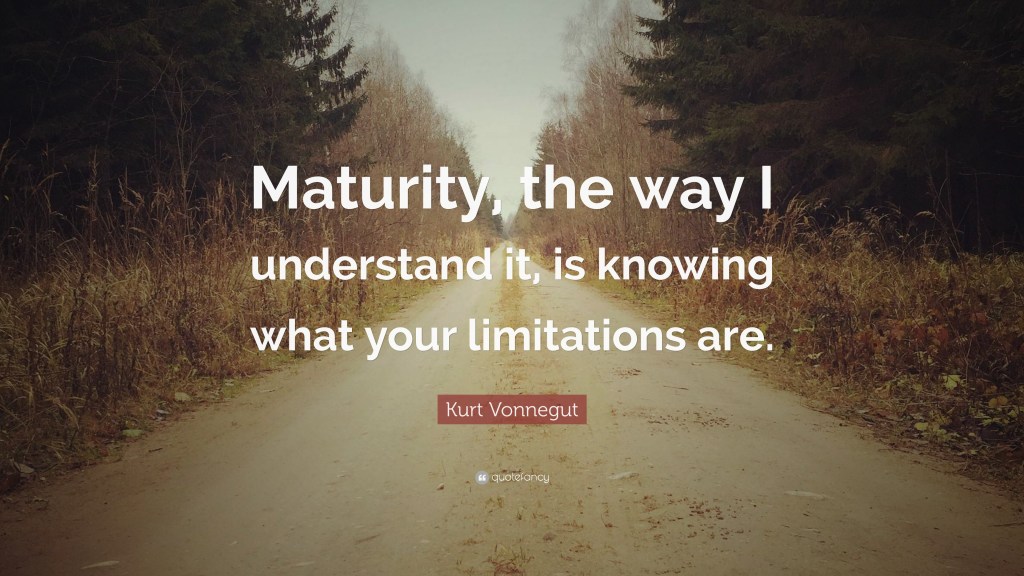
Knowing Your Limits is a Part of Self-Efficacy

(Image from Google)

Do I want to finish strong in these courses? Do I believe I can? How much of my capabilities say I can? How much percentage does myself tell me I cannot? “Our belief in our own ability to succeed plays a role in how we think, how we act, and how we feel about our place in the world.” (Cherry, 2019) This belief defines self-efficacy.

People would always say, “Know your strengths.” Yes, this is good because through our strengths, we will be able to determine our goals and future. However, I want to focus on limitations today. Why knowing your limitations is important? Let me count the ways.

Knowing your limitations gives you SMART goals (Specific. Measurable. Attainable. Relevant. Time-based.) Sometimes, people have the tendency to have ambitious goals—wanting to accomplish so many things. But when you know your limitations, you know which goals to prioritize and which ones are attainable at a certain time.

Knowing your limitations helps you focus on your strengths. Acknowledging what you cannot do re-directs your energy to the things you know you can do. This re-directed and re-focused energy enables you to explore more about yourself and to discover more of your potential.

Knowing your limitations allows you to teach yourself of new skill sets. Since you know your weaknesses, you can now develop these areas until you achieve progress little by little. Once a weakness is developed, it will become your additional strength.

Knowing your limitations opens your eyes to the main source of your strength. At times, you do things even though you have not really trained to do such. For example, you can teach children even though you have not previously taken teaching courses. In this case, you know that Someone inside of you is helping you to extend beyond what you think you can do.

With these in mind about my own limitations and strengths, I now know how to navigate personal mood swings, how to control my emotions, how to pull myself up first thing in the morning to read my modules, and when to take some rest. With this knowledge about myself, yes, I want to finish strong in these courses. I believe I can. My capabilities say I can. And, although 30% of myself says I cannot, I know where I get my strength—and, He is a limitless One.

Cherry, K. (2019). Self Efficacy and Why Believing in Yourself Matters. Retrieved 5 March 2020 from https://www.verywellmind.com/what-is-self-efficacy-2795954

Models and Mentors in My Life

Santrock. Online Learning Center.
http://www.mhhe.com/socscience/education/edpsych/santrocked02/ch07a_sa.html

Having positive role models and mentors can make an important difference in whether individuals develop optimally and reach their full potential. First, evaluate the role models and mentors who have played an important part in your life. Second, think about the type of role model you want to be for your students. Third, give some thought to how you will incorporate other models and mentors in your students’ lives. Fourth, explore who your education mentor might be.

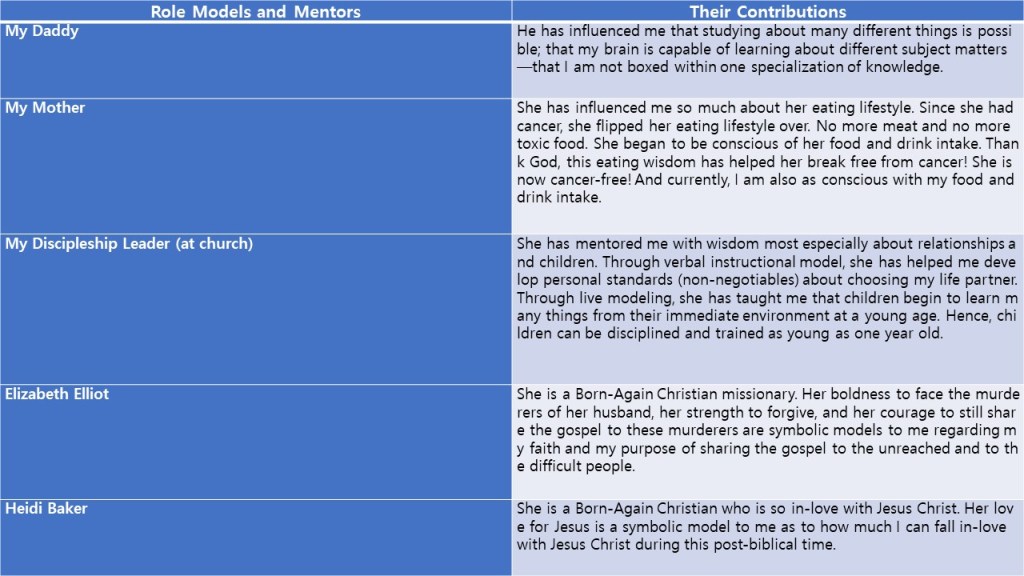
My Models and Mentors
List the most important role models and mentors in your life. Then describe what their positive modeling and mentoring have meant to your development.

The type of role model I want to be for others (other learners)
Describe which characteristics and behaviors you believe are the most important for you to model for your students.

 
1. Vulnerable and open for correction
2. Self-encouraged and self-motivated
3. Vision and purpose driven
4. Laughs a lot, takes life easily, and joyful in all situations
5. Chooses to forgive and to love even the people I do not like. Peace is not dependent on my surroundings.

How I will incorporate models and mentors in my profession (as an educator)
Describe a systematic plan for bringing models and mentors into your students’ lives in one or more domain(s) you plan to teach, such as math, English, science, music, and so on.

I teach English as a Second Language to Cambodian children. I can apply Bandura’s three types of modeling in my classroom:

  1. For live modeling, I want the students to see their English teachers (not only me but also the other English teachers) as their live models in their faith, in making good choices everyday regardless of how simple the choice is (e.g. to eat or not to eat vegetables; to shout or not to shout), and in respecting each other. In addition, I always allow my students to work in pairs so that they can teach each other. The other student can learn the way the other student processes the seatwork and the lesson.
  2. For verbal instruction modeling, I am my student’s immediate mentor. As I observe their learning process and progress every day, I also develop different strategies and activities to help them acquire the knowledge and to develop the behavior that is good for their independence and self-efficacy.
  3. For symbolic modeling, I always plan appropriate films for my students. For example, I want to address the issue of quitting easily when something is difficult. Hence, before our Sports Festival, our class watched the film “Karate Kid” where the students learned to do self-encouragement by saying “Go back up!” in every failure. It was effective as per my experience.

Who will be my education mentor? What would my ideal education mentor be like?
Do you have someone in mind who might serve as an education mentor when you become a teacher? If so, describe the person.

As of now, I have no idea about my education mentor. I don’t have one, so far, except for the greatest Teacher of all—Jesus Christ. When He was still on Earth, He taught with love. This is the only model and teaching system I have.

What would your ideal education mentor be like?

My ideal education mentor is:

1.          Self-encouraged and self-motivated

2.          Applies wisdom in all decisions and choices

3.          Vision and purpose driven

4.          Strategically applies a system that does not teach per se; instead, such system facilitates learning

5.          Applies SMART goals for the leaners (Specific. Measurable. Attainable. Relevant. Time-based).

Operant Conditioning in a Filipino Home Context

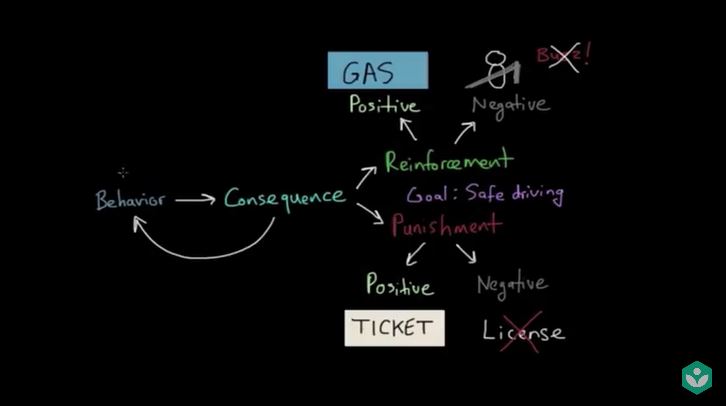
Before you get confused, let me show you this screenshot.

(Screenshot from Khan Academy. Positive-and-negative reinforcement and punishment [YouTube video, 6:58 min])

Vocabulary: Operant Conditioning
Meaning: It is a process of learning where a certain behavior is associated with a consequence. In this process, there is a specific target behavior that we want to achieve. To achieve such, we control the behavior through the consequences of actions, as seen in the above screenshot. This image illustrates that operant conditioning works as a cycle of behavior and consequence.
On the photo above, the goal behavior is “Safe Driving.” However, I will not talk about the process on the photo. Instead, I am taking you to a Filipino home to see how operant conditioning has been used by parents to encourage their children achieve high grades in school.

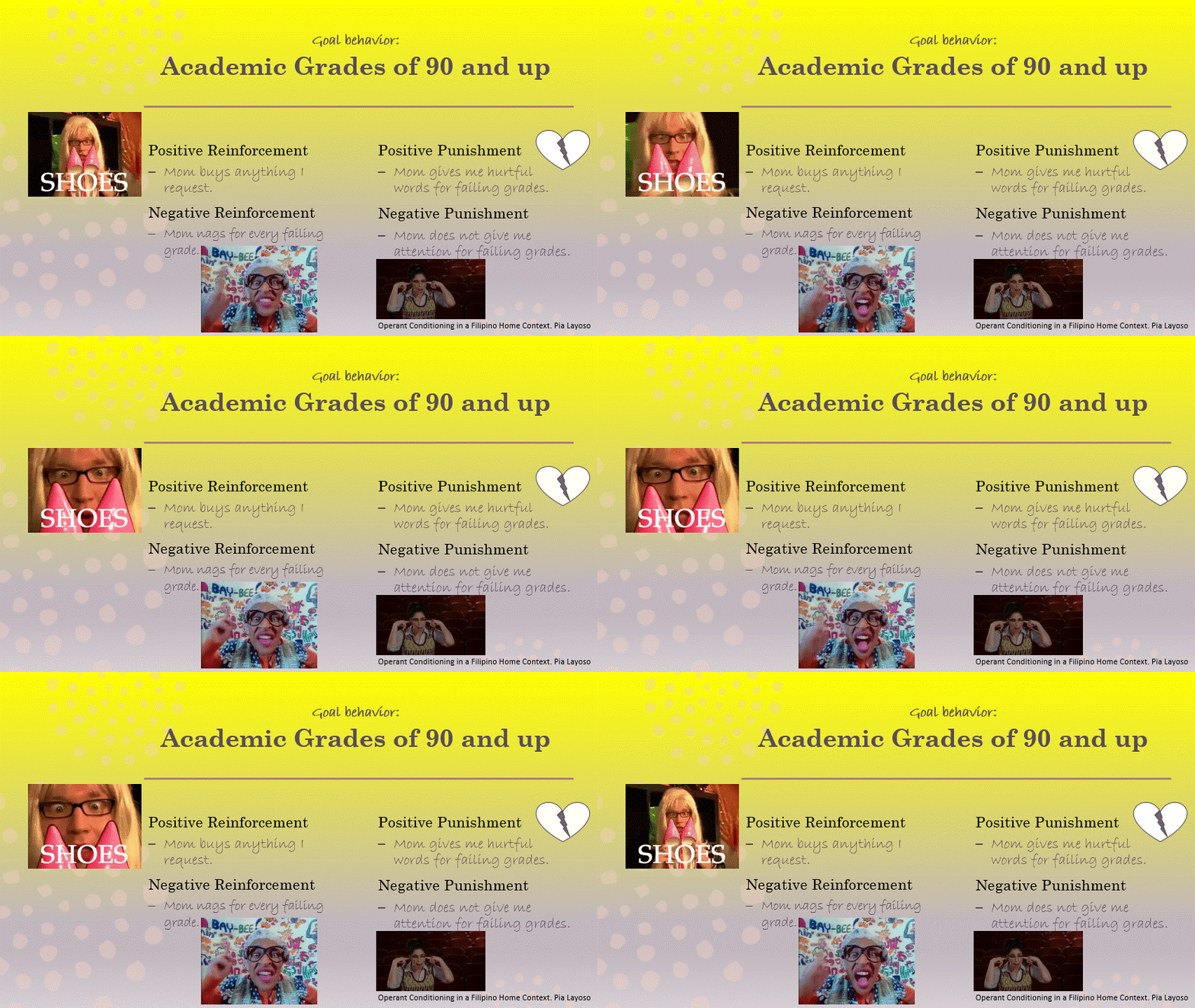
When I was ten years old, the goal behavior in our house was to get academic grades of 90 and above. Anything less than 90 will have a consequence. Consider the illustration below of how operant conditioning worked during my elementary days. Other Filipino homes are possibly using the same behaviorist approach.

(Images retrieved from Google)

A positive reinforcement is something that I receive when I achieve the goal behavior. I get a new pair of shoes, for example, for getting 90 and up in my academic grades.

A negative reinforcement is something that I don’t want to happen when I don’t achieve the goal behavior. I don’t want the noise of my mom nagging when I fail. Hence, I will do my best getting high academic grades.

A positive punishment is something that I get even though I don’t want it—because I fail to achieve the goal behavior. In this example, I don’t want to hear hurtful words from my mom, but I hear words such as “You are weak.” “You are just not good.” because I fail to achieve the goal behavior.

A negative punishment is something that is taken away from me when I fail to achieve the goal behavior. In this example, my mom withdraws her attention from me when I get academic grades lower than 90.

Consequently, these behaviorist approaches lead me to become an academic achiever. I graduated Salutatorian in elementary and in high school. I was also a partial-scholar and a Dean’s Lister in college. However, these approaches had a negative effect in my morale. Pushing me as a child to always get high academic grades made me feel that my value inside the house only depended on my academic achievement. If I were not an honor student, I would feel like I did not exist inside the house and nobody really cared about me. Such impact grew deeply in my subconscious until adult years. I became an achiever in everything especially in the workplace. But, the pressure of achieving eventually lead me to frustration. When our family business closed down because I could not manage its sustainability; when I lost my income because I resigned from my Managerial post; when my long-time relationship failed; when I could not push through with Singapore Management University because I had no source of living because our business failed—my life was devastated. The pressure just got into me, and I felt worthless. My life and all those achievements felt worthless.

Having shared these adverse effects of punishment in a child, I highly suggest for parents to build a solid foundation of love and trust relationship with their children before doing any kind of operant conditioning. To me, operant conditioning will only become balanced inside the house if the parents can build this solid foundation in their children’s mind and heart first. Hence, the parents can always correct a wrong behavior with love. Reinforcement and punishment can be chosen properly to avoid planting bitter roots in the children’s heart. And, when giving reinforcement or punishment, a good talk between the parents and the children will help the children understand the consequences of their behavior. A solid foundation of love and trust relationship will always result in better little people inside the home, in school, and eventually, better adults in our community not only in a Filipino but also in a global context. Isn’t this what we all want after all—something better?

Math Vs English

“Teacher, hurry! Let’s go to the classroom!” Vannsing called me while I was doing my Module 2 activities during break time. He was just excited to do more Math exercises after finishing fifteen pages. Then, here came Vannavuth and Sengmean running and throwing water at each other. The three boys told me that they wanted to answer more Math tests because it was easy.

Sadly for the boys, the next subject was English. To help me multi-task, I prepared English activities for them; and only this time, I asked them to do their works with me on my office table to make them feel that we were all learning together.

31 January 2020 morning learning time with Khmer Grade 2

For the first English exercise, Vannsing immediately said, “This one is ‘niticult’ [difficult].” Vannavuth and Sengmean reacted the same way. The exercise was about the sounds of G as soft and hard sound. These young ESL learners found it difficult to distinguish the difference. So, I helped them by reviewing the sound with them. The end result? The three boys answered two pages only in forty minutes.

Why am I sharing this experience? It is one concrete example that illustrates the complexities of human intelligence. This time, my focus is on Howard Gardner’s theory of Multiple Intelligence. Vannsing, Vannavuth, and Sengmean being able to finish a 15-page Math activity compared to a 2-page English exercise shows that they are more numerically intelligent than linguistically capable. But, this illustration does not prove that the boys’s verbal-linguistic intelligence is not good. They are still in the process of learning English as their second language. Further, Vannsing always shows more interest in drawing and visuals compared with the two. Vannavuth likes Art, too, but he more enjoys toys that have remote controls while Sengmean likes to move a lot. He can easily memorize hand movements and dance steps.

Gardner’s theory is a big help to me as a learning facilitator for the three boys. With this theory, I now understand more deeply the boys’ reactions to the lessons and to the exercises. I now know that when one says “difficult,” it does not mean he is not intelligent. It simply means that this certain subject is not his strength. Thanks to the nature of intelligence as always being flexible for growth, I can help this student to discover his learning abilities and eventually improve his intellectual abilities.

Vannsing, Vannavuth, and Sengmean are ESL learners who love Math, always excited to go to Art and P.E. classes, find English grammar difficult but love to spell words out loud, like to learn how to play “Jesus Loves Me” with a xylophone, and find sympathy for Ishaan–a character who suffers from Dyslexia in the Indian film “Taare Zameen Par” (“Like Stars on Earth,” 2007).

Math exercises vs English exercises

Vannsing, Vannavuth, and Sengmean

Only if you are a Khmer who can read English or a foreigner who has stayed in Cambodia for a long time that you can recognize these words as names: Vannsing, Vannavuth, and Sengmean. Yes, I have three students only this season in grade two, but so much desire is in me to give them a better classroom experience throughout their grade two life.

Banking on this desire, I chose to enroll in UPOU’s Professional Teaching Certificate course. I know that my current knowledge is very insufficient to understand how these little brains process the lessons we have in each subject, especially that they are not native English speakers. I also know that there is so much more to explore about how to become a better and a more informed teacher, how to manage my classroom, how to walk these little hearts through the different emotional changes they experience every day (whether at home or in school), and how to make a holistic curriculum for the whole elementary department. I know that I am limited, and there is so much more to learn so I can reach more young hearts and pour out more love into their cup. These are the reasons that I myself want to learn more. Yeah, I sound redundant with this word: “more.”

Further, “Time flies when you’re having fun!” as the hackneyed saying goes. But, for an UPOU student–who goes with the school bus to pick up students at 7:00AM, joins a daily meeting at 7:30AM, has classes from 8:00 to 11:10AM and 6:30 to 7:30PM, handles fifteen school staff, manages the school accounting department, and the entire school curriculum–time is as fleeting as the sunset.

How do I manage my time? As much as I want to write here about behavioral conditionings, the learning theories, learning orientations, learned and unlearned phenomena, learning versus maturation, instincts and reflexes, the best thing that I have learned, or say, still in the process of learning is how I manage my time everyday. If I could manage my time very well, my stress level would not shoot up. Hence, my mind would be more peaceful and my countenance more pleasant for the children. If I learned to work on this inner struggle, then I would be better outside. Then, I would be a better teacher to Vannsing, Vannavuth, and Sengmean.

Design a site like this with WordPress.com
Get started