“Teacher, hurry! Let’s go to the classroom!” Vannsing called me while I was doing my Module 2 activities during break time. He was just excited to do more Math exercises after finishing fifteen pages. Then, here came Vannavuth and Sengmean running and throwing water at each other. The three boys told me that they wanted to answer more Math tests because it was easy.
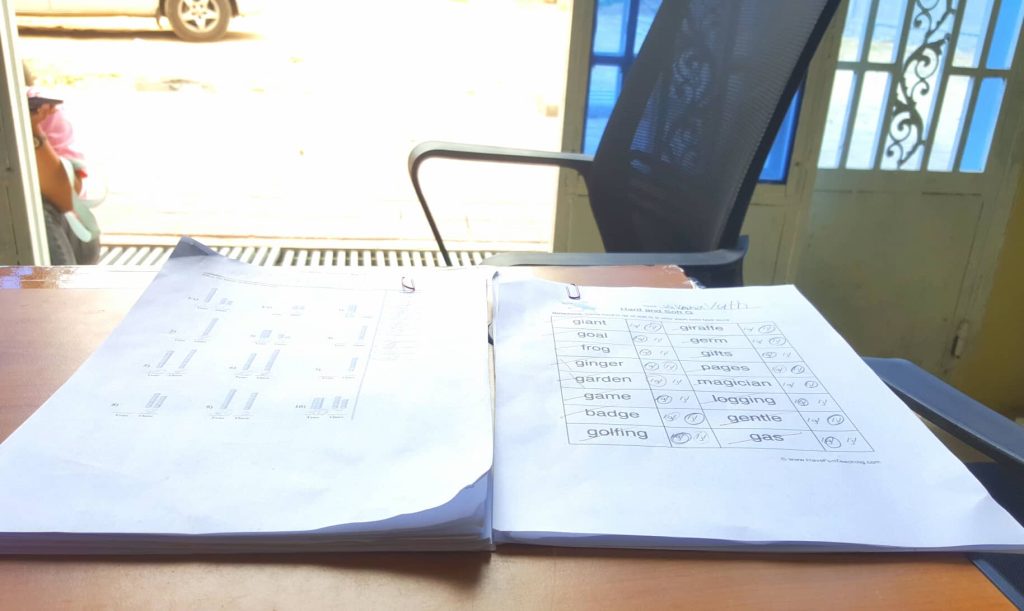
Sadly for the boys, the next subject was English. To help me multi-task, I prepared English activities for them; and only this time, I asked them to do their works with me on my office table to make them feel that we were all learning together.

For the first English exercise, Vannsing immediately said, “This one is ‘niticult’ [difficult].” Vannavuth and Sengmean reacted the same way. The exercise was about the sounds of G as soft and hard sound. These young ESL learners found it difficult to distinguish the difference. So, I helped them by reviewing the sound with them. The end result? The three boys answered two pages only in forty minutes.
Why am I sharing this experience? It is one concrete example that illustrates the complexities of human intelligence. This time, my focus is on Howard Gardner’s theory of Multiple Intelligence. Vannsing, Vannavuth, and Sengmean being able to finish a 15-page Math activity compared to a 2-page English exercise shows that they are more numerically intelligent than linguistically capable. But, this illustration does not prove that the boys’s verbal-linguistic intelligence is not good. They are still in the process of learning English as their second language. Further, Vannsing always shows more interest in drawing and visuals compared with the two. Vannavuth likes Art, too, but he more enjoys toys that have remote controls while Sengmean likes to move a lot. He can easily memorize hand movements and dance steps.
Gardner’s theory is a big help to me as a learning facilitator for the three boys. With this theory, I now understand more deeply the boys’ reactions to the lessons and to the exercises. I now know that when one says “difficult,” it does not mean he is not intelligent. It simply means that this certain subject is not his strength. Thanks to the nature of intelligence as always being flexible for growth, I can help this student to discover his learning abilities and eventually improve his intellectual abilities.
Vannsing, Vannavuth, and Sengmean are ESL learners who love Math, always excited to go to Art and P.E. classes, find English grammar difficult but love to spell words out loud, like to learn how to play “Jesus Loves Me” with a xylophone, and find sympathy for Ishaan–a character who suffers from Dyslexia in the Indian film “Taare Zameen Par” (“Like Stars on Earth,” 2007).
 Better Teachers