I used to dread assessments. The reason was the pressure these assessments put on my shoulders as a student that I needed to perform my best to get high scores so that my family would value my existence, so that my relatives would not look down on me, and so that my classmates would not bully me.
If only there was one teacher who explained well what assessments were for (for improving teaching and learning process), this pressure could have been shaken off my shoulders even at a young age. Perhaps, I did not grow up as a competitive and a grade-conscious person.
So now that I have learned this: Assessments are developed to help stakeholders gather evidence of learning to provide information for the purpose of the Assessment Cycle (Gravells, 2016):
Identifying needs
Planning learning
Facilitating learning
Assessing learning
Evaluating learning
I will surely pass on this new habit of mind to my learners. I will instill in their minds the significance of assessments, and hopefully, these learners would let go of competition and of the mindset of finding identity in school performance.
It is time to change the perspective of learners about assessments. Perhaps, once, you also dreaded the surprised quiz that your elementary teacher gave. I hope that when you read this, you will know that assessments are not meant to categorize you as an inferior or a superior learner. Instead, I hope you realize that these are created by stakeholders in order to address your individual needs as a learner.
“Mag-aral ka ng mabuti. ‘Yan lang ang pamana namin sa’yo.” How many Filipino families have said this statement in so many generations? Such statement means children are supposed to get high scores to get good grades because the parents expect them to. If the child fails in the tests, his family (at times) brands him as “slow” or “mabagal ang utak” or maybe with some other dreadful words that seem to define the child. As an adult, how would you feel receiving these terms about you from your family?
In this blog, we will see a reflection on a Filipino family culture in relation to education and assessments.
In general psychology, human beings are automatically attracted to what is good. This is innate. This is also why we are attracted to children who perform well in academics. Usually, parents evaluate academic performance with report cards or with test results. I have not met so many parents who ask about their child’s learning progress or learning process. Rarely do parents ask teachers these questions “What’s my child’s learning style?” What’s my child’s personality in school?” “What’s my child’s intelligence based on Howard Garner’s Theory of Multiple Intelligence?” Normal questions of parents (which are often directed to the child) include: “Bakit ang baba ng grades mo?” “Hindi ka siguro nag-aaral?” When parents see low grades, they usually assume that the fault falls on the child. To the Filipino parents, test results—when high—would mean “matalinong anak” whereas when low would mean “b*b*ng anak.”
How about the child’s side of the story? Aside from the shameful brand that a child receives when he gets low test scores, “Mag-aral ka ng mabuti. ‘Yan lang ang pamana namin sa’yo.” also implies a huge burden because of the definition of “Mabuti.” This word definitely means good test scores and positive report card evaluation to parents. The pressure of impressing the parents or meeting parents’ expectation is on! What if the child’s learning process does not meet the parents’ expectation? Then, there goes the shameful branding again.
In this blog, I just cited two situations but I think these are enough to show us why students usually dread assessments. Students dread assessments because assessment results would mean either family acceptance or shameful branding; either parental pride over them as “matalinong anak” or parental sorrow because of them as “b*b*ng anak.”
In this light, having read the sources on the purposes of assessments, I have just realized that I have been totally unaware until now about the important roles of educational assessment in teaching and learning processes. As a summary, the bottom line of assessments is this: educational assessment, an integral part of a student’s learning process, shows how much he has learned or he has not learned—which should give the teacher a clear direction on how to help this student to improve and to become a better learner. Better teachers empower learners so do better parents as they empower their children and not burden them with high academic test results.
We exist to help reconcile humanity to his Creator by helping him go back to his true identity in Christ Jesus. We believe that the only way for humanity to enjoy the fullness of life on earth and to receive complete joy is through learning. When humanity learns the truth, he will be free from all the strivings of life; he will grow in the fullness of life and its giftings; and, he will walk in light and wisdom especially amidst seasonal challenges. Consequently, humanity will become a valuable steward both in the local and in the global community—which is the first purpose of his creation.
In simple words, we are here as coaches and facilitators of learning for all lovers of knowledge, seekers of wisdom, and chasers of life success. We believe that the love for learning is the only key to honest success in life. We define success in life as becoming a valuable and joyful steward of self-giftings for both self-actualization and for the benefit of the community.
B. Content
Our learning modules are based on the foundations of curriculum: psychology, philosophy, and sociology (Pietig 1998). Teaching is an ‘intellectual enterprise’ which demands for sound judgments and moral actions that will directly affect learners. (Pietig 1998)
Step 1. Amazing Listener
Step 2. Amazing Speaker
Step 3. Amazing Reader
Step 4. Amazing Writer
Step 5. Amazing Professional: nurse, doctor, pharmacist, banker, accountant, teacher, pastor, missionary, businessowner, manager, hotel staff, farmer, school director, vlogger
Step 6. IELTS or ESL Certificate Holder / Certified English Professional
After all the theories I have learned from the course, I have recognized that one of my pitfalls as an educator is in “deep thinking and deep learning.” Since I am teaching language, I settled with rote learning—all about memorizing. I thought when students memorize “How are you today?” and “I’m fine. Thank you.” they will learn the language. This mindset was so wrong!
Now, I need to think more deeply so that my students will learn more deeply. The principles of attention, primacy-recency effect, and motivation made an impact in my teaching practice. These three are the major changes that I will apply in my classes.
This course is indeed a mindset breaker!
Respect and Recognize Learning Process
Through this course, I have confirmed that each learner has unique intelligence and different epistemology. Hence, as a teacher, I need to recognize my student’s intelligence and epistemology. This is the only way that I can create a more engaged and efficient learning environment during my students’ learning process.
Ready, Set, Action!
With all these learnings, I am ecstatic to create. Firstly, I want to create a holistic curriculum for young learners. This curriculum will encompass the best principles from all the learning theories and will be applied in appropriate academic level. Secondly, I want to create instructional designs and materials that are based on human psychology—materials that touch behavioral learning, social learning, cognitive learning, and even constructivist learning. This will be colorful, fun, and creative especially for young learners. Thirdly, I want to create teaching methods and strategies that are most effective for each class, each subject, each lesson, and each level. These strategies will be contextualized based on the group of students’ culture, knowledge influencers, and emotional quotient stability.
I know that these things sound too much and too idealistic. But hey! Nothing is impossible. I don’t know what will come out from all of these ideas, but I know for sure that there will be a new creation. That is, a new creation of educational elements and a new creation of me as a facilitator of learning.
So, what now? Have I achieved my very goal which I stated in this eJournal: to become a better teacher? Not yet. As for now, I am satisfied to see myself to have become a better learner. And, maybe, as a better learner, I can become a better teacher.
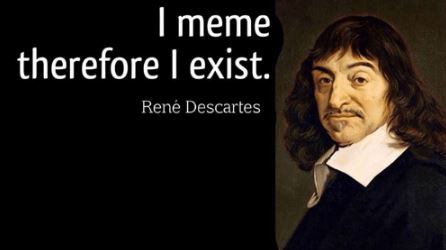
Hey! Do you know René Descartes? I am sure you have heard of his name in your academic classes. René Descartes was a famous philosopher from France. He was a Math and a Science fanatic!
To help you further, “I think; therefore I am.” Have you heard of this quote? Yes, Descartes said it!
(Just for laugh. Image from medotme)
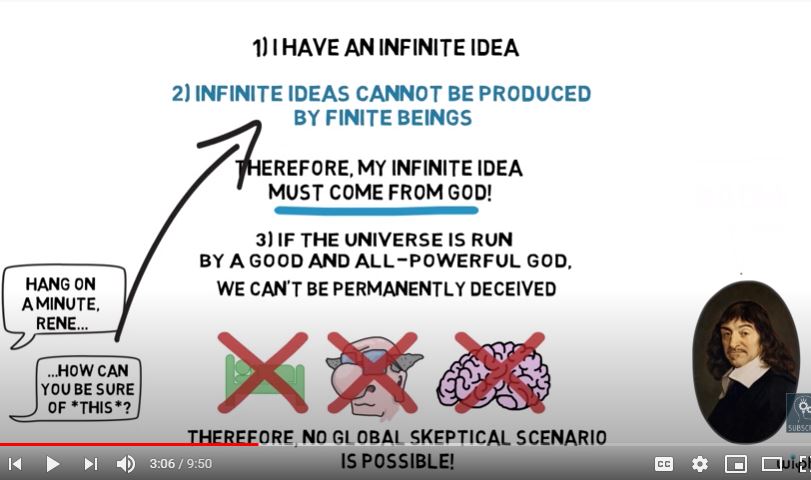
Moving forward, René Descartes responded to the philosophy of skepticism during his time in the 1600’s. According to Descartes, human ideas are infinite, and infinite ideas cannot be created by finite beings. Hence, human ideas are from God. Most importantly, if the entire universe is handled by God, then these philosophies–a.) Ideas are from dreams and stay in dreams, b.) There is an evil genius that controls human minds. and, c.) The brain works on its own.–are invalid. For you to visually understand, let me post a screenshot here.
Descartes’ philosophy against global skeptics is my current epistemological belief. For one, I do believe in an infinite God. For two, I believe that my brain is limited but God’s ideas are not. And, finally, God is always in control of everything. Nothing happens without His knowledge and control.
Since I have this epistemological belief, the most effective learning theory for me as a learner is cognitivism. I get my intrinsic motivation from God. At times, I feel inadequate in learning, absorbing new knowledge, and processing it. However, I believe that when I pray, God helps me through His Holy Spirit. He gives me wisdom, knowledge, and discernment to distinguish valuable lessons from invaluable ones and to identify false beliefs from truth. Most of the time, I believe my writing ideas are from this infinite Being. And, even I get surprised with how ideas would flow and would make sense.
Overall, man has various ways of knowing, has unique reservations and justifications of knowledge, and has different knowledge influencers. For example, you may believe or not believe in everything I write in this eJournal. You may even bash my writing or my ideas. But, I do respect whatever you have in mind. You own your worldview, your perspective, your opinion. This respect, however, does not mean I agree with you. We may always agree to disagree depending on our epistemological beliefs. In the end, we all come out better from every argument; come out better from every disagreement; and come out better from every disconnection of beliefs.
Like what this blog is all about, better is what we want to become in the end.
This perspective is the easiest to explain. In life, we observe people, imitate people, and learn from their experiences. Why? Because we somehow desire to achieve what others have achieved or to avoid the suffering others have experienced. Do you, sometimes, pretend that you are this actress whom you so admire? Do you, sometimes, pretend that you are the best teacher in the whole wide world? Have you read self-help books like “How to Ruin Your Life by 30” by Steve Farrar?
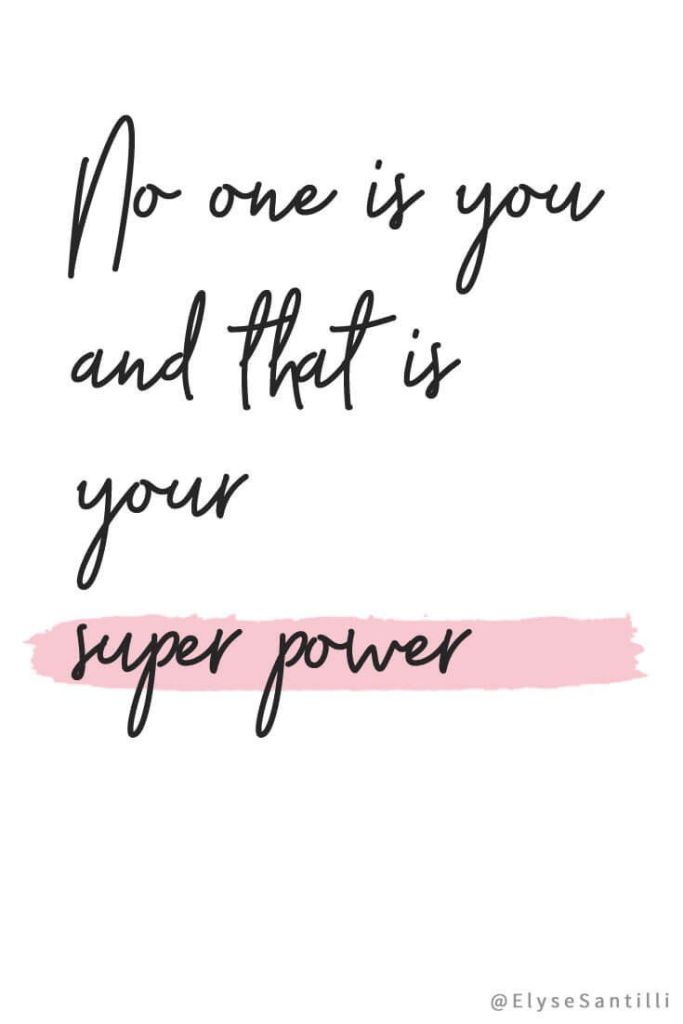
This kind of a motivation can be a fire-starter and can also propel us to become who we are. But, let’s not forget. Nobody is the same in this world. We are all unique. Whether we have the same name or not, our personalities, character, quirks, and mindworks are uniquely created and distinctively designed. Let this message be enough to emphasize my point:
The cognitive views of motivation stress that human behavior is influenced by people’s beliefs and expectations about themselves and their environment.
This perspective is composed of several theories:
a. Expectancy – value theory
How do I perform what is expected of me? I am expected to be a daughter, a wife, or a teacher. Hence, I need to be this.
b. Self-efficacy theory
“I believe I can; therefore, I can.” “I believe I am; hence, I am.” These are the mantras under the self-efficacy theory.
c. Goal orientation theory
I have this long-term goal. I want to go through this challenge so I can achieve my long-term goal. This kind of a motivation promotes mastery learning and gives a deeper encouragement compared to a performance-based goal.
d. Attribution theory
What is the reason of my failure? What do I need to do or to change to succeed next time?
When we seek explanation for the outcome of what we do, we are humbling our self. We acknowledge that we are not perfect, and we need to improve. This kind of a motivation gives more positive learning results.
e. Self-determination theory
Man has a natural basic need for competence, autonomy, and relatedness.
When the expectations from us are clear, we tend to become more motivated to accept challenges.
When we are given choices and the freedom to choose, we tend to become more motivated to move.
When we are involved and when we feel guided, we tend to become more motivated to commit.
f. Self-worth theory
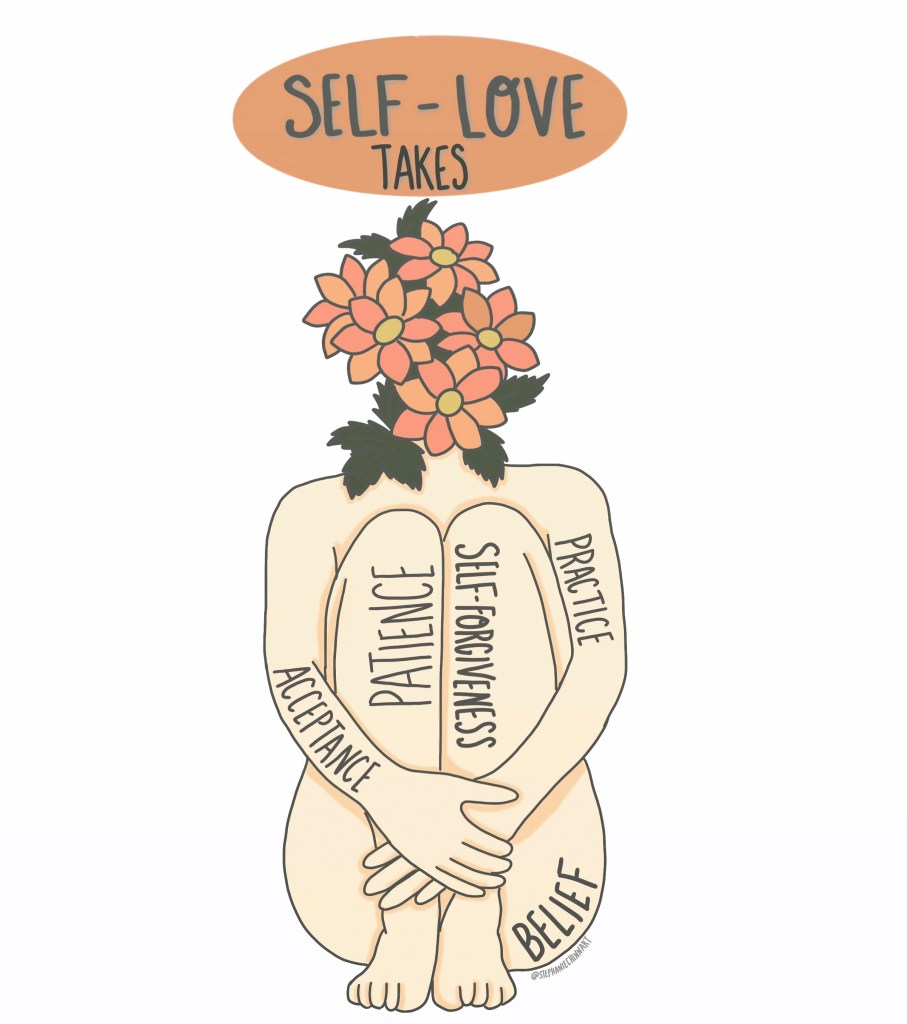
When we realize that we do not need to prove anything to anyone just to have this sense of self-worth, we embrace the freedom to be, to live, and to deeply breathe peacefully. Our mind becomes clearer about how we want to write the story of our life—the characters that we want to include; the settings that we want to be in; the standards that we want to keep; the morals that we want to share from generations to generations; and, all the plot twists that we want to record because these twists—failures, disappointments, and pain—have taught us things more valuable than temporary self-gratifications.
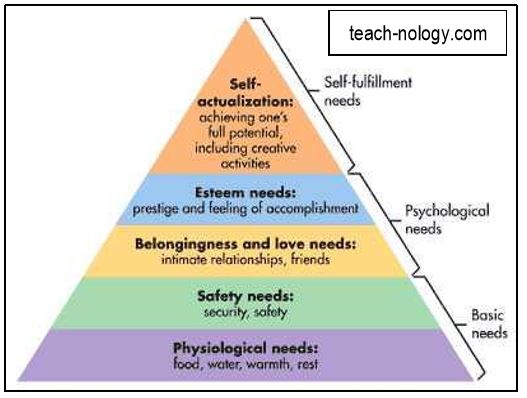
Maslow’s Hierarchy of Needs is the center of this perspective. The photo attached here shows that human beings have basic needs, psychological needs, and self-fulfillment needs. Needless to say, each category arises after the other is satisfied. This is where the concept of “man is insatiable” comes from.
At once other (and ‘higher’) needs emerge and these, rather than physiological hungers, dominate the organism. And when these in turn are satisfied, again new (and still ‘higher’) needs emerge and so on. This is what we mean by saying that the basic human needs are organized into a hierarchy of relative prepotency.
The understatement of Maslow’s Hierarchy of Needs lies in human desire/s as motivation/s. If man is hungry, he will do something to feed himself. But, digging more deeply in Maslow’s theory of needs, would you agree when I say that man is naturally hungry for food, water, warmth, rest, security, safety, intimate relationships, friends, prestige, feeling of accomplishment, creative activities, and self-fulfilling achievements? We all desire these things, and we feel disoriented when we lose one. For example, we feel unsecured when we lose our job. We feel rejected when we get heart broken. We lose our self-esteem when we do not receive recognition for what we do. We feel like we lack something (indistinguishable) when we have not enough space to express our self to create what we want to create and when we do not feel valued because of what we can give.
The truth is even studies have not really measured the fullness of self-actualization.
Man has not yet achieved or fully measured self-actualization. Since, in our society, basically satisfied people are the exception, we do not know much about self-actualization, either experimentally or clinically. It remains a challenging problem for research.
My question is, how much do we need to do in order to achieve the highest hierarchy of human needs? How much do we need to be in order to feel that satisfaction and contentment of spirit? How much do we need to give for us to say that we contribute to the upkeep of our planet?
This kind of a motivation is tiring. To me, this seems like an endless search for “meaning” and “purpose”—something abstract that we try our best to identify so that we can go back to this “meaning” or “purpose” as our motivation in life. Do you know a rich man who has achieved the fullness of happiness and peace? Do you know a poor man who has such happiness and peace? What is the goal of our life, really? Wealth? Knowledge? Achievement? Good works?
(Image from job2tendotorg)
I used to be in a corporate world—a French institution in the Philippines. The work environment, benefits, and my colleagues were all good. I actually wanted this kind of a corporate life. That season of my life was like a dream come true to me. But no matter how dreamy life was, something was always missing. My salary was not enough for my financial needs. The work environment did not suffice to the things that “I still wanted to achieve.” My colleagues were not enough reasons to be happy. So, I left.
Currently, I live in Cambodia. Our school is still under construction and debt. Due to the Corona virus, our school’s financial support stopped. Hence, we have no salary. I have no achievements or any corporate entitlement. I live as a teacher of Grade 2 students. Yes, I am assigned as the School Director, but who’s my boss? Our work environment does not have a “Good job reward system.” We have no recognitions or whatsoever that will acknowledge me as an asset of a company. Despite of these scenarios, I can honestly say that I am content. I have joy. I am satisfied with what I have and what I have not. I have peace of mind and peace of heart everyday.
So, what is the difference in motivation between my dreamy corporate life and my current laid-back life?
In my dreamy corporate life, I strove hard to climb the ladder of the Hierarchy of Needs. I made sure not to lose my job to provide for my physiological and safety needs. I made sure that I pleased everyone and pleased my boss for me to belong. I made sure that I performed to be recognized. I made sure that I did my roles well to be fulfilled. This kind of a motivation can propel us with so much energy at the start. However, like what I have said, don’t you feel tired in striving so hard—achieving so much or not—being disappointed by yourself, by others, or by the company, and yet, after all these performances, you find what you do meaningless? On the other hand, in my current season, I have learned that it is okay to not be okay. Whether my life is recognizable to others or not, it does not matter. Whether my decisions would bring me wealth or not, it does not matter. Whether people recognize my efforts or not, it does not matter. Whether people look up to me or look down on me, I would not allow others’ perspective of me affect the way I see myself. Whether I achieve or not, it is okay. I am okay. I am enough. I am valuable. I belong. And, I can simply be—no pressure to perform, to please, and to achieve. Now, there is freedom in this kind of a motivation. Can you feel this freedom? This leads me to the next perspective.
From elementary to high school days, my mother would buy me stuff that I requested every time I got high grades. For example, she would buy me shoes of a certain brand when I ranked as an honor student. In high school, she would even buy me an airplane ticket because I earned such a reward. Behavioral perspective is all about rewards and punishments—external objects that are called “reinforcers.” Rewards and punishments reinforce a certain behavior that we desire to have. For instances, parents reward their children to keep up with good academic grades. Teachers punish students with low grades to reinforce change in their “lazy study habits.” I get to watch a good film after reading long study materials as a self-reward.
Do you remember some rewards you have received for doing “a great job?” Awards, recognition, medals, gifts—such things are rewards for being or doing “great.” Being grounded, not receiving an award, being given with so much household chores—such are punishments for “not behaving well” or for not doing “great.” Some learners tend to simply perform while they forget the purpose of learning just to avoid punishment. Some crave for rewards while they neglect genuine joy during the learning process. Motivation under a behavioral perspective is external, can be positive or negative, and can be adjusted depending on the learner.
However, this kind of a motivation is only surface deep. People who have depended on external reinforcements have these in mind: “I will be like this or like that after I do this.” “I will achieve this if I get to survive the challenges.” “I can have what I want after this.” “I don’t want to suffer so I will do this.” –such reasoning are under the behavioral perspective. Remember, surface deep motivation does not last. Perhaps, this is why on some days, we lose energy to keep on keeping up.




 Better Teachers